- Temple etiquette
- Marine conservation
- Photography consent
- Beach and volcano safety
Start with the rule that applies where you are
Indonesia is culturally and geographically diverse. A rule at a Balinese temple, a customary village, or a marine national park may not apply in exactly the same way elsewhere. Signs, site staff, licensed guides, religious leaders, rangers, and local authorities should take priority over a general online checklist.
Some conduct is prohibited by law or a site's regulations; other behaviour is a matter of local etiquette. Both deserve attention, but they should not be confused. Ask before entering restricted spaces, photographing people, flying a drone, swimming, hiking, or collecting anything from a natural or heritage site.
- Read the entrance rules before buying a ticket.
- Ask when a sign or custom is unclear.
- Do not assume that permission at one site applies at another.
1. Do not damage coral or remove marine life
Never stand, sit, or hold onto living coral while snorkelling or diving. Keep your fins away from the reef, maintain buoyancy, and do not chase, feed, touch, or lift marine animals for a photograph. Shells, sand, coral fragments, and other natural objects should remain where they are; collection rules can vary by protected area.
Choose an operator that gives a wildlife and reef briefing, uses suitable moorings where available, and limits waste. The term ‘reef safe’ is not a complete guarantee by itself, so reduce reliance on sunscreen with shade, a rash guard, and other protective clothing, then follow local product guidance. Do not anchor, enter, or fish in restricted zones.
2. Do not treat a place of worship like a photo set
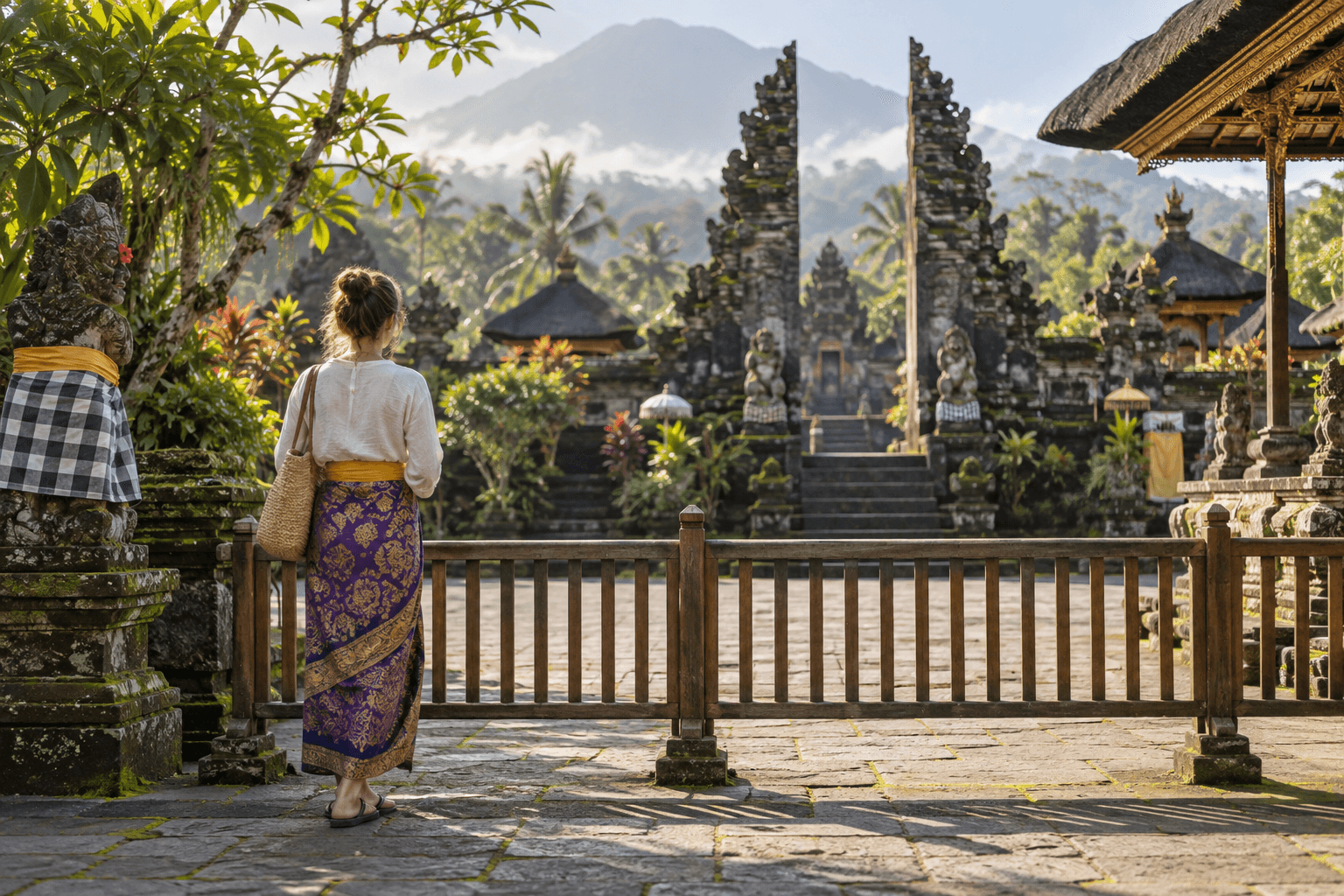
Temples, mosques, churches, and shrines may be active places of worship even when visitors are welcome. Cover shoulders and knees when requested, remove footwear where indicated, lower your voice, and never interrupt a prayer or ceremony for a photograph. At many Balinese temples, visitors wear a sarong and sash; use what the site provides and follow its staff.
Do not climb walls, gates, statues, altars, or sacred trees. Some temple areas are reserved for worshippers or have additional entry customs, including rules related to ritual purity. These rules differ by temple, so check the posted guidance or ask staff discreetly instead of relying on assumptions. If access is refused, accept the decision respectfully.
3. Do not litter, carve, or take pieces of heritage
Carry all waste out when bins are unavailable, especially on islands and mountain trails. Food scraps are also waste: they can attract animals and alter their behaviour. Avoid single-use items where practical, refill water responsibly, and never burn or bury rubbish at a natural site.
Writing, scratching, attaching objects, or climbing on historic structures can cause permanent damage. Indonesia's Cultural Heritage Law protects registered heritage, and individual attractions may impose additional sanctions. Do not remove stones, pottery fragments, plants, or other objects, even when they appear loose or abandoned.
4. Do not photograph people or ceremonies without permission
Ask before taking a close portrait, photographing children, recording a funeral, or documenting a religious or customary ceremony. Consent to watch does not automatically mean consent to photograph or publish. Put the camera away when a host, guide, sign, or community rule prohibits it.
Some customary communities restrict cameras, phones, drones, or entry to particular areas. Rules can change and may differ between outer and inner areas of the same community. Arrange a recognised local guide where required, avoid geotagging sensitive places, and never block a procession or daily work for content.
5. Do not ignore boundaries, closures, or guides
Barriers at cliffs, waterfalls, volcanoes, caves, and wildlife areas are safety controls rather than suggestions. Do not cross them for a photograph. Volcanic activity, landslides, fire, weather, nesting wildlife, or religious observances can close an area with little notice. Check the relevant park or authority again on the day of the visit.
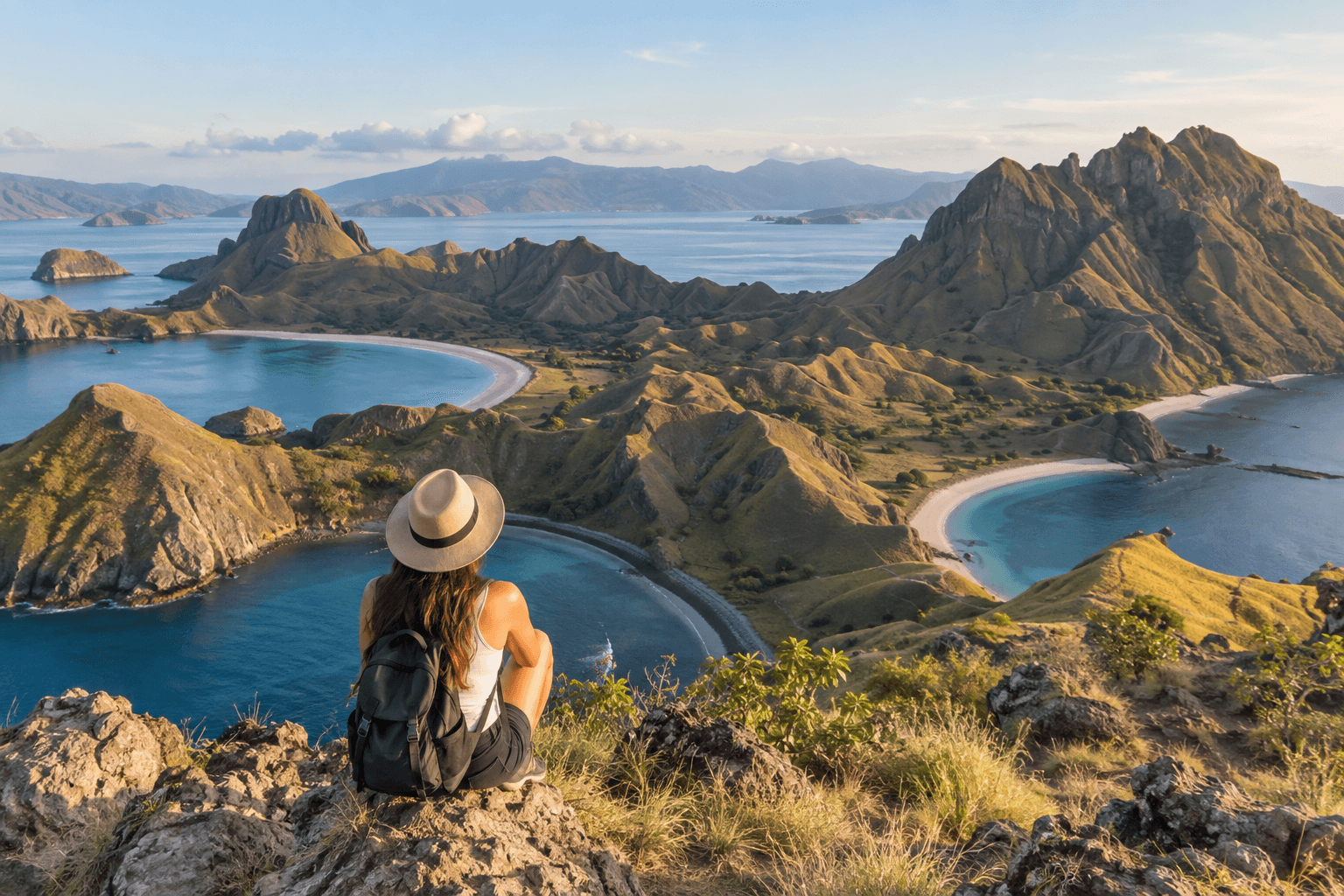
Use authorised routes and follow ranger instructions around wildlife. Do not approach a Komodo dragon, monkey, or other wild animal because it appears calm. Feeding wildlife creates risk for visitors and can make animals dependent or aggressive.
6. Do not underestimate the sea
A calm-looking beach can still have rip currents, sudden depth changes, powerful shore break, or no lifeguard. Obey red flags and local warnings, never enter a closed swimming area, and ask locally when conditions are unclear. A snorkelling mask is not safety equipment, and an inflatable toy is not a substitute for a life jacket.
If caught in a rip current, stay as calm as possible, float, signal for help, and move parallel to the shore when able rather than exhausting yourself by fighting directly against the current. For boat trips, ask about suitable life jackets, passenger limits, emergency communication, and weather decisions. Monitor BMKG forecasts and marine warnings near departure.
7. Do not assume one social norm fits every island
Public behaviour that attracts little attention in one tourism area may feel inappropriate in a conservative village or sacred space. Modest clothing, restrained affection, calm conversation, and asking before entering private property are useful defaults. This is about reading the setting rather than stereotyping all Indonesians as having one view.
Use your right hand, or both hands, when giving or receiving something where practical; avoid touching a person's head; and remove shoes when invited into a home if your host does so. During ceremonies, let residents and worshippers pass first. A polite question is usually better than pretending to know a custom.
A quick check before visiting
Confirm the site's opening status, ticket source, dress requirements, photography policy, physical demands, and weather. Save the address and contact details of your accommodation, carry identification as required, and make sure travel insurance covers the activities you plan to undertake.
Responsible travel is practical: it reduces risk, protects places from damage, and helps hosts feel respected. When official instructions and this guide differ, follow the current official instruction.
- Check official park, temple, or attraction channels.
- Carry a light layer or sarong for respectful coverage.
- Keep a dry bag for rubbish and valuables.
- Leave room in the itinerary for closures and weather.
Frequently asked questions
What should tourists avoid doing in Indonesia?
Avoid entering restricted areas, damaging coral or heritage, littering, touching wildlife, photographing people or ceremonies without permission, ignoring dress rules at sacred sites, and disregarding safety flags or official closures.
What should I wear when visiting temples in Indonesia?
Requirements vary. Cover shoulders and knees as a respectful baseline, then follow the site's specific rules. Many Balinese temples require a sarong and sash, which may be provided or available near the entrance.
Can tourists photograph ceremonies and local communities?
Ask first. A public setting does not remove the need for respect, especially for close portraits, children, funerals, worship, and customary ceremonies. Some communities and sacred areas prohibit photography completely.
Is it safe to swim at any open beach in Indonesia?
No. Beaches may have rip currents, powerful waves, sudden depth changes, or no lifeguard. Follow flags and local warnings, check weather and sea conditions, and do not enter the water when an area is closed.
Are all of these rules legally prohibited throughout Indonesia?
No. Some are national or local laws, some are attraction or park regulations, and others are community customs or good safety practice. Current instructions at the specific destination take priority.
Sources and further reading
We used the following primary consumer resources to review time-sensitive claims in this guide.
Compare options for your trip.
Continue to Traveloka to check current schedules, availability, and final prices for your travel dates.
Affiliate disclosure. This page contains Traveloka affiliate links. We may earn a commission when you book through them, at no additional cost to you. Commercial relationships do not determine our editorial recommendations.