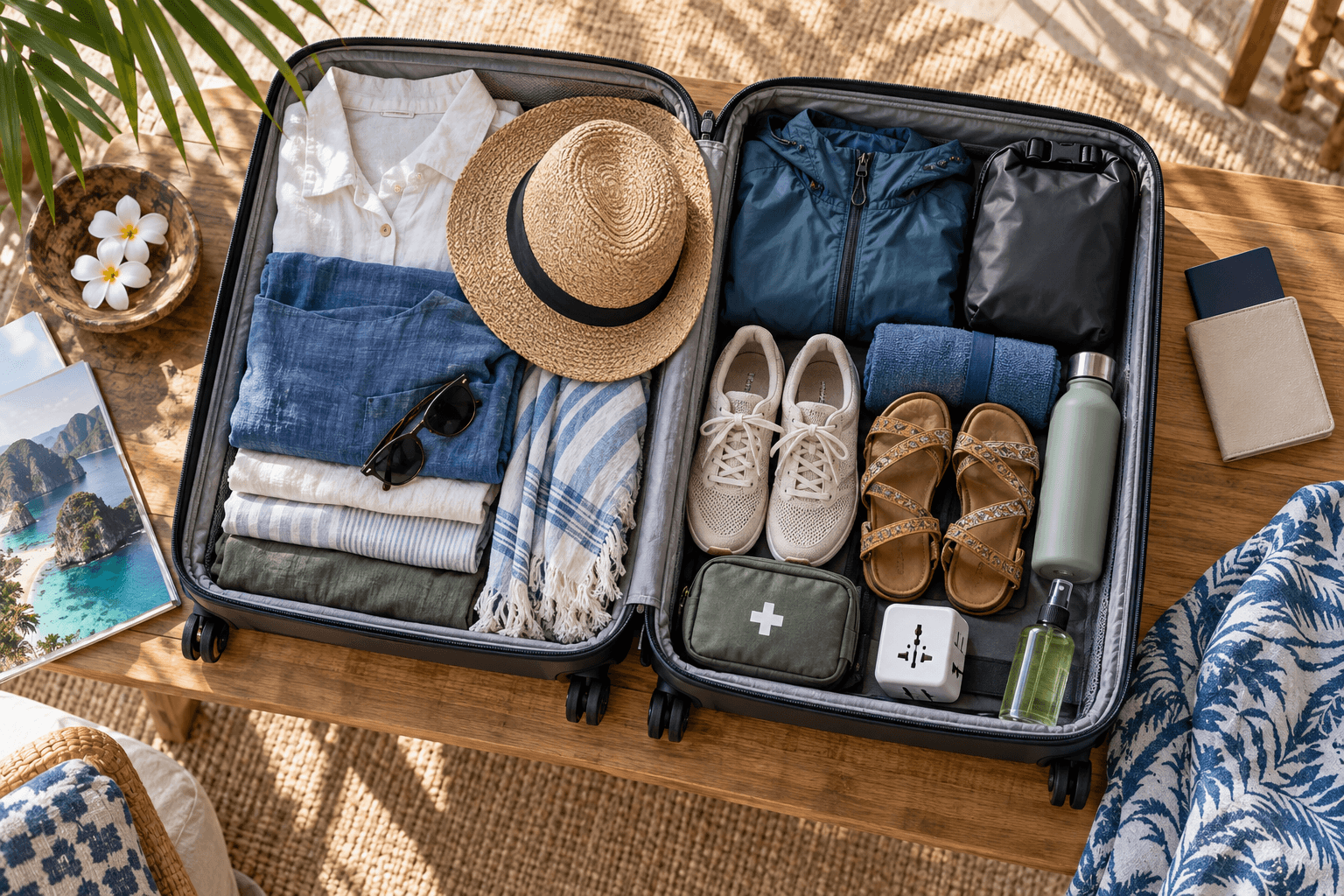
- Documents and backups
- Tropical-weather layers
- Mosquito and sun protection
- Power and water essentials
Before the list: pack for your actual route
Indonesia stretches across thousands of islands, so a Bali beach holiday, a Jakarta business trip, a Bromo sunrise, and a Raja Ampat boat journey do not need the same kit. Check the forecast, altitude, transport, accommodation, and planned activities for every stop before packing.
Use this ten-item list as a reliable base, then add specialist equipment only when your operator or itinerary requires it. A lighter bag is easier to move between flights, trains, ferries, and hotels, and leaves room for locally made souvenirs.
1. Passport, travel documents, and offline copies
Keep your passport, required entry documents, travel-insurance details, prescriptions, and confirmed first-night address together. Entry requirements depend on nationality, trip purpose, and length of stay, so verify them through an official Indonesian government channel before departure rather than relying on an old checklist.
Store encrypted digital copies offline and keep one separate from the originals. Add your insurer's assistance number, airline contacts, accommodation details, and an emergency contact. Copies cannot replace original documents, but they can make reporting a loss easier.
2. Lightweight clothing and one modest layer
Choose breathable tops, loose trousers or skirts, underwear that dries reliably, and a light long-sleeved layer. Add a warmer layer when visiting highlands or using strongly air-conditioned transport. Pack enough for the time between laundry stops instead of carrying an outfit for every day.
Clothing that covers shoulders and knees is useful at temples, mosques, villages, and formal settings. Individual sites can impose their own dress rules or provide a sarong, so follow signs and staff guidance rather than assuming one outfit works everywhere.
- Choose quick-drying pieces that can be worn together.
- Bring swimwear only for appropriate places.
- Use a laundry bag to separate damp clothing.
3. Layered sun protection
Pack broad-spectrum sunscreen that suits your skin, sunglasses with UV protection, and a brimmed hat. Shade, lightweight covering, and a rash guard reduce how much skin needs sunscreen during long boat or beach days. Follow the product directions and reapply after swimming or heavy sweating.
The phrase 'reef safe' is not a universal guarantee. If a marine park or operator has a sunscreen rule, follow its current guidance. Clothing, shade, and avoiding contact with coral remain useful ways to reduce your impact while protecting your skin.
4. Footwear matched to the itinerary
Comfortable walking shoes cover city streets, museums, and many temple visits. Secure sandals are helpful around beaches, boats, and places where shoes must be removed. Break footwear in before the trip and pack blister dressings if you expect long days on foot.
A serious volcano hike, muddy forest trek, or technical activity may require footwear beyond ordinary trainers. Ask the operator about terrain and equipment, and do not treat casual sandals as hiking shoes simply because they are water resistant.
5. Personal medicine and a compact health kit
Bring enough regular medicine for the trip, ideally in its original labelled packaging, plus copies of prescriptions and any supporting letter required for controlled medication. Check Indonesian rules before carrying restricted substances. Keep essential medicine in cabin baggage within airline security limits.
A small kit can include dressings, antiseptic, oral rehydration salts, and products you already know how to use. Ask a clinician or pharmacist about motion sickness, diarrhoea treatment, vaccines, and other needs for your health and route. The CDC recommends arranging travel-health advice at least a month before departure when possible.
6. Effective mosquito-bite protection
Dengue occurs in Indonesia, while malaria risk and prevention advice vary by island and area. Use an insect repellent with an evidence-based active ingredient such as DEET, picaridin, IR3535, oil of lemon eucalyptus or PMD, or 2-undecanone, following its label and age restrictions.
Long sleeves, trousers, screened or air-conditioned rooms, and a bed net where accommodation is exposed provide extra protection. Never apply permethrin directly to skin. Ask a travel-health professional whether malaria tablets are appropriate for the exact places you will visit.
7. The right plug adapter and a cabin-safe power bank
Indonesia normally uses 230-volt, 50-hertz electricity with type C and F sockets. A plug adapter changes the pin shape; it does not change voltage. Read every device's input label. Equipment marked for 100-240V generally needs only a suitable adapter, while incompatible single-voltage equipment needs expert advice or should stay at home.
Keep power banks and spare lithium batteries in cabin baggage, protect the terminals, and check the airline's capacity and in-flight-use rules before travelling. Airline and route restrictions can be stricter than a general packing guide.
8. A refillable bottle and a safe-water plan
A refillable bottle reduces repeated purchases where a trusted refill station is available. Use sealed bottled water, properly boiled water, or water treated by a method suitable for the organisms present. Ask your accommodation where its refill water comes from.
Do not assume an ordinary bottle filter makes every water source safe: filters vary and may not remove viruses or chemicals. Avoid drinking tap water unless a reliable local source confirms it is potable, and remember safe water for brushing teeth and ice when local advice calls for it.
9. A dry bag, phone pouch, and quick-dry towel
A small roll-top dry bag helps organise electronics and documents on ferries, small boats, waterfall walks, and wet-weather transfers. A compact quick-dry towel is useful for hostels and island days, but many full-service hotels already provide towels.
Water resistant does not mean safe underwater. Check the bag or phone pouch's tested rating, close it exactly as instructed, and test it with tissue before trusting it. Leave passports and irreplaceable electronics ashore when an activity does not require them.
10. Packable rain protection and a practical day bag
Carry a lightweight rain jacket or poncho and a compact umbrella where it is practical. Indonesia's wet and dry patterns differ by region and can shift from year to year, so check BMKG's current regional forecast instead of relying on one nationwide season rule.
A comfortable day bag should hold water, sun and rain protection, essential medicine, a small amount of cash, and an offline map without becoming heavy. Keep cards and backup cash in separate secure places, and use a rain cover or internal liner when the bag itself is not water resistant.
- Wear bulky shoes during transfers to save luggage space.
- Weigh cabin and checked bags against each airline's allowance.
- Recheck forecasts and operator equipment lists two days before each major activity.
A final packing check
Lay everything out and remove items that do not serve your confirmed route. Then verify documents, medicine, weather protection, charging compatibility, and the baggage rules for every airline or boat operator on the itinerary.
Most everyday items are available in Indonesian cities and established tourism areas. Pack the hard-to-replace essentials first, leave some space, and let your itinerary determine the rest.
Frequently asked questions
What clothes should I pack for Indonesia?
Pack breathable, quick-drying clothing, a light long-sleeved layer, and clothing that covers shoulders and knees for religious or cultural sites. Add warmer clothing for highlands and footwear suited to your actual activities.
What plug adapter do I need in Indonesia?
Indonesia normally uses type C and F sockets at 230V and 50Hz. Check your charger's input label: a 100-240V device usually needs only the correct plug adapter, while an incompatible single-voltage device may need a converter.
Do I need malaria tablets for Indonesia?
It depends on the exact islands and areas you will visit, your health, and current medical guidance. Malaria risk is regional. Discuss your itinerary with a travel-health professional before departure and use mosquito-bite prevention everywhere it is advised.
Can visitors drink tap water in Indonesia?
Do not assume tap water is safe to drink. Use sealed, properly boiled, or appropriately treated water unless a reliable local source confirms that a specific supply is potable. A basic bottle filter may not remove every hazard.
Can I put a power bank in checked luggage?
Power banks and spare lithium batteries should be carried in cabin baggage, with terminals protected. Capacity, quantity, and in-flight-use rules vary, so confirm the current policy with every airline on your booking.
Do I need rain gear in Indonesia's dry season?
A compact rain layer remains useful because seasonal timing and rainfall vary by region and year. Check BMKG's current forecast for each destination shortly before travel.
Sources and further reading
We used the following primary consumer resources to review time-sensitive claims in this guide.
Compare options for your trip.
Continue to Traveloka to check current schedules, availability, and final prices for your travel dates.
Affiliate disclosure. This page contains Traveloka affiliate links. We may earn a commission when you book through them, at no additional cost to you. Commercial relationships do not determine our editorial recommendations.