- Beginner-friendly destinations
- Arrival and accommodation checks
- Money and transport planning
- Official emergency numbers
Is Indonesia suitable for a first solo trip?
Indonesia can be rewarding for solo travellers, but it should not be treated as one uniform destination. Large cities, established tourism areas, remote islands, and mountain routes have very different transport, connectivity, customs, and support services.
For a first trip, choose a well-connected base, arrive during the day when possible, and keep the opening itinerary simple. Good preparation does more for safety than assuming a popular destination is automatically risk-free.
Choose a manageable first destination
Yogyakarta is a practical introduction to Java because it combines railway access, Trans Jogja buses, ride-hailing, hostels, and central cultural sights. Indonesia's official tourism portal specifically highlights its relatively complete tourism infrastructure for solo travellers.
Bali offers extensive accommodation and tourism services. Ubud suits culture and a slower inland base, while Canggu is more social and surf-focused; Sanur can be easier for travellers seeking a calmer coastal area. Local rules and road conditions still require attention.
Bandung can work for a short city break connected by rail from Jakarta, with food, cafés, and nearby highland trips. Traffic and dispersed attractions make it important to choose a hotel close to the area you will use most.
Build a flexible itinerary with firm anchors
Book the first nights, know how to reach the accommodation, and identify the main intercity connections. Leave open time within that framework rather than arriving with no plan or filling every hour.
Avoid scheduling a separate ferry, domestic flight, and international departure on the same day. Fatigue and missed connections are harder to manage alone, so count transfer days honestly and keep a buffer before fixed departures.
Make the arrival easy
Save the accommodation address, phone number, booking voucher, and route offline. Check the official airport or station pickup area and use an established taxi, ride-hailing service, public transport, or pre-arranged transfer.
If arrival is late, tell the accommodation in advance and confirm that reception will be open. Do not announce to strangers that nobody knows where you are staying, and avoid accepting an unverified ride simply because it is offered first.
Choose accommodation for safety and support
A hostel can provide social spaces and local information, while a private room or homestay may offer better rest. Neither type is automatically safer. Prioritise recent reviews, a clear address, secure room access, lockers, staffed reception, and a route you are comfortable using after dark.
For dormitories, check locker size, privacy, bathroom arrangements, and whether mixed or single-gender rooms are offered. For a private property, confirm check-in procedures and who can access the building.
- Recent reviews from solo guests.
- Secure storage for passport and valuables.
- Well-lit access and reliable transport.
- Reception or support during arrival hours.
- Clear guest and visitor policies.
Protect money, documents, and connectivity
Carry at least two working payment methods and keep backup cash separate from the main wallet. Use official or bank-affiliated ATMs, cover the keypad, and avoid carrying all documents and cards in one bag.
Keep encrypted digital copies of your passport, entry documents, insurance, and bookings, plus key information offline. Share the itinerary with a trusted person and agree on a simple check-in routine rather than relying only on continuous live location, which can fail when the phone or signal does.
A charged phone, local connectivity, an offline map, and a power bank are practical safety tools. Keep the accommodation address written down in case the phone becomes unavailable.
Use transport with a backup plan
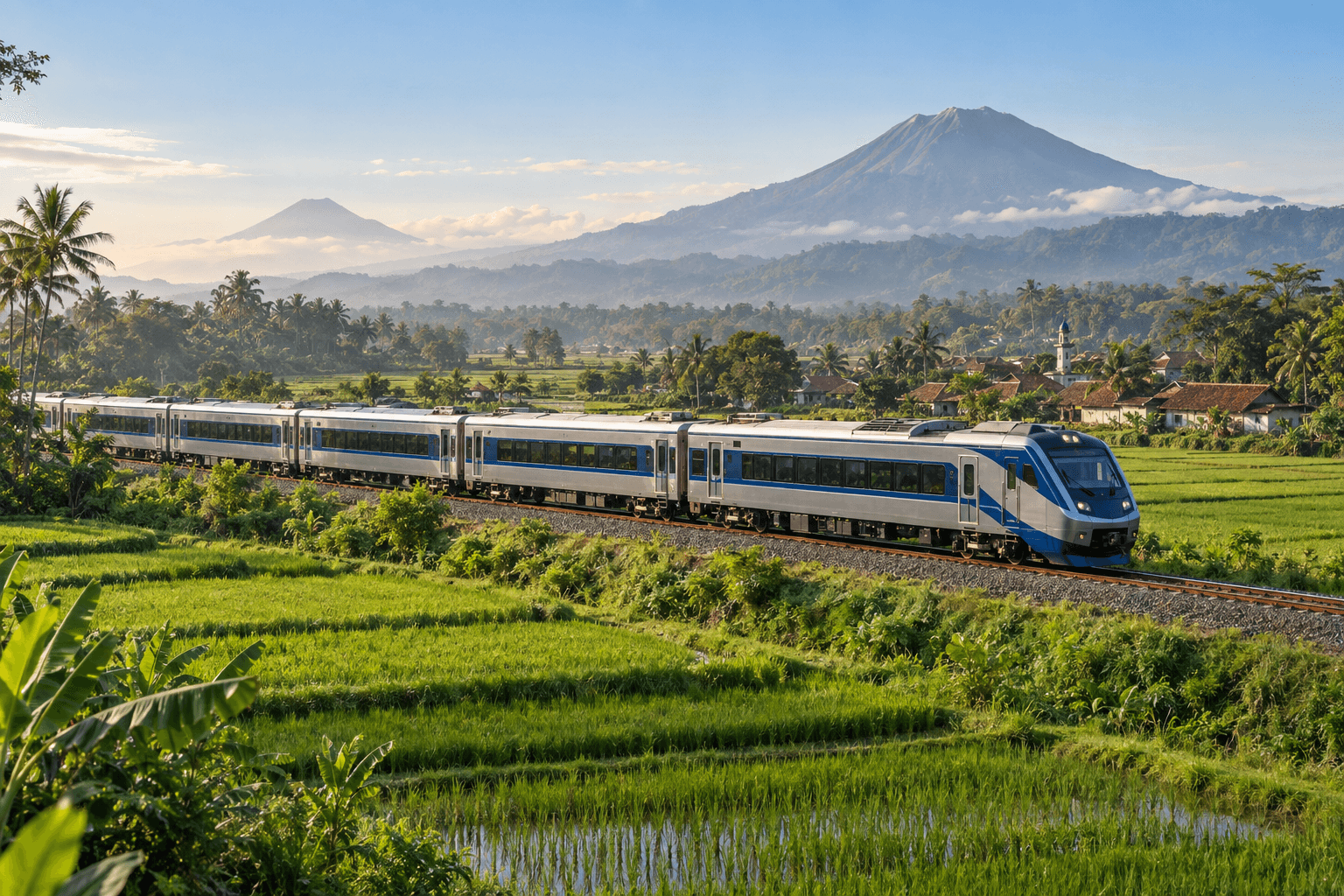
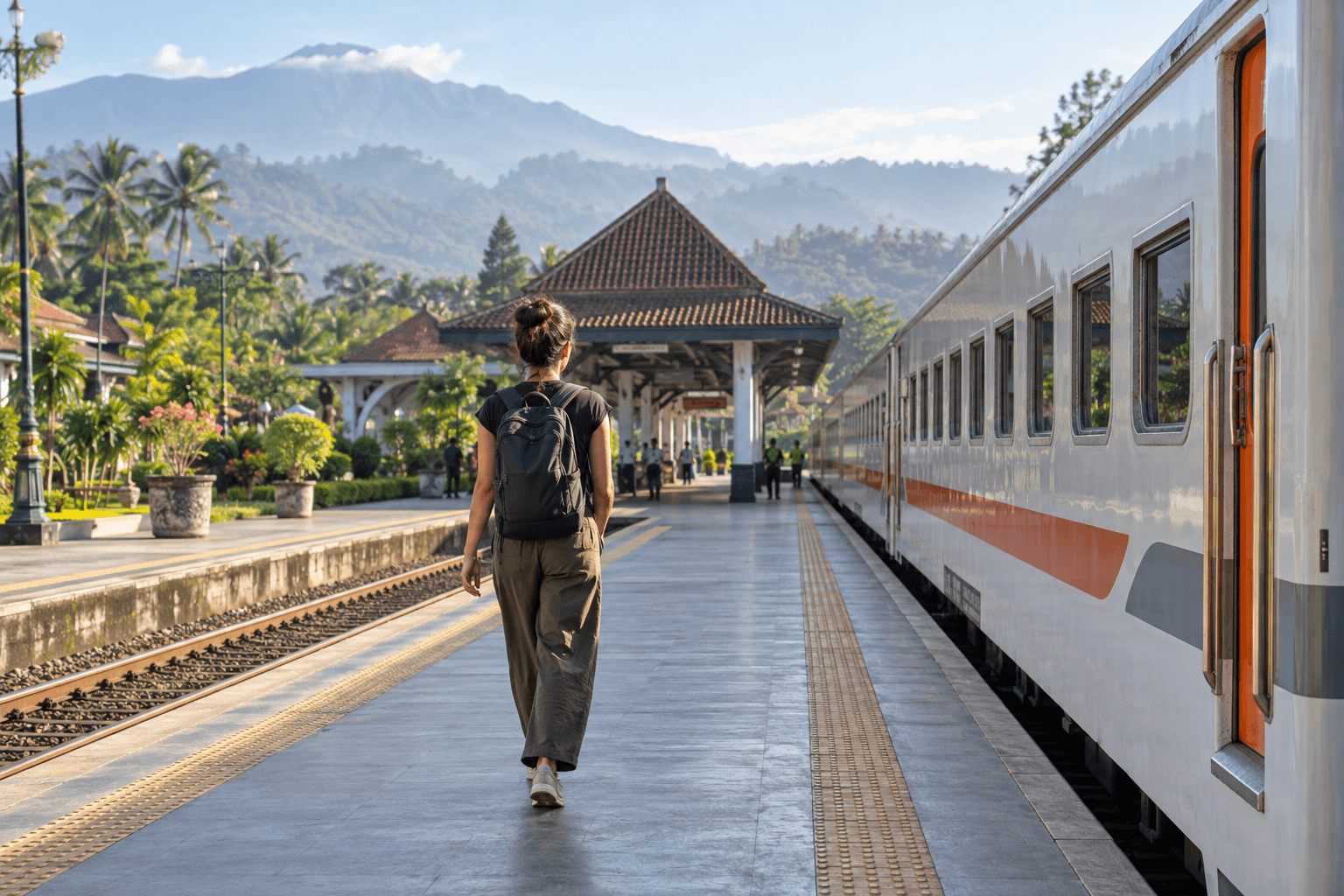
For intercity journeys in Java, trains can reduce the uncertainty of road traffic. Buy through official or established channels, carry the identification required by the operator, and arrive with enough time to find the correct entrance and platform.
For local trips, verify the vehicle and driver details shown in the app before boarding. Wear a helmet on a motorcycle ride and do not self-drive without the legally required licence, experience, and insurance coverage. When something feels wrong, end the journey in a busy, well-lit place.
Respect local culture and boundaries
Dress and behaviour expectations vary. Cover shoulders and knees where requested at religious sites, remove shoes when instructed, and ask before photographing people or ceremonies. Local guidance takes priority over what another traveller says was acceptable elsewhere.
Bali has specific rules for foreign visitors covering sacred places, accommodation, conduct, and road use. Across Indonesia, use licensed guides where a site or outdoor activity requires one and follow restricted-area signs.
Stay alert without travelling in fear
Keep valuables out of sight in crowded stations, markets, and nightlife areas. Limit alcohol enough to retain awareness, do not leave drinks unattended, and avoid isolated shortcuts after dark. Tell someone when plans change substantially.
Trust discomfort as a reason to leave, even when you cannot explain it. Move towards staff, families, a staffed hotel, a reputable business, or another busy public place, and ask for help directly.
Outdoor activities need their own risk check. Use a reputable operator for diving, volcano routes, and remote boat trips; confirm weather, equipment, guide credentials, and emergency procedures before starting.
Emergency contacts and a personal response plan
Indonesia's official tourism safety page lists 110 or 112 for police or general emergencies. The National Police confirms that 110 is a free 24-hour police hotline. The integrated 112 service is implemented by participating local governments, so coverage should be checked for the city you are visiting.
Save the local accommodation number, insurance assistance line, embassy or consulate contact, and a trusted person's number. In an emergency, state the location, what happened, whether anyone is injured, and a callback number as clearly as possible.
- Police: 110.
- Integrated local emergency service where available: 112.
- Ambulance or medical emergency: 118 or 119.
- Fire service: 113.
- Search and rescue: 115.
Meet people without giving up control
Walking tours, cooking classes, day trips, hostel activities, and small-group experiences can add social time without committing your full itinerary to a stranger. Meet new contacts in public first and arrange your own route back.
Solo time does not have to feel awkward. A journal, a café, a museum audio guide, or an early evening meal can create comfortable pauses between activities. The goal is a sustainable trip, not constant social performance.
A simple seven-day first solo route
For an easy Java introduction, spend three nights in Yogyakarta, take an intercity train to Bandung, and spend three nights exploring the city and one nearby highland area. Keep the final day close to the departure route.
For Bali, choose one primary base for four or five nights and add a second area only if it serves a distinct purpose. Moving hotels every day creates more luggage handling and solo transfers without necessarily improving the trip.
Frequently asked questions
Is Indonesia safe for solo travellers?
Many people travel solo in Indonesia, but conditions vary by destination and activity. Start in a well-connected area, use established transport and accommodation, protect documents and money, and follow current local guidance.
Where should a first-time solo traveller go in Indonesia?
Yogyakarta is practical for rail access and central cultural sights. Bali offers extensive tourism services, while Bandung can suit a short urban trip. Choose the destination that best matches your transport confidence and interests.
What is Indonesia's emergency number?
Police can be reached on 110. The integrated 112 emergency service operates in participating local-government areas, so check local availability. Indonesia Travel also lists 118 or 119 for medical emergencies, 113 for fire, and 115 for search and rescue.
Are hostels better than hotels for solo travel?
Hostels can make meeting people easier, while a private hotel room may provide more rest and privacy. Choose based on recent reviews, secure storage, location, reception support, and your comfort level.
How can I avoid feeling lonely while travelling alone?
Join a reputable day activity, walking tour, class, or hostel event, and balance social plans with low-pressure solo activities such as cafés, museums, or journalling.
Sources and further reading
We used the following primary consumer resources to review time-sensitive claims in this guide.
Compare options for your trip.
Continue to Traveloka to check current schedules, availability, and final prices for your travel dates.
Affiliate disclosure. This page contains Traveloka affiliate links. We may earn a commission when you book through them, at no additional cost to you. Commercial relationships do not determine our editorial recommendations.