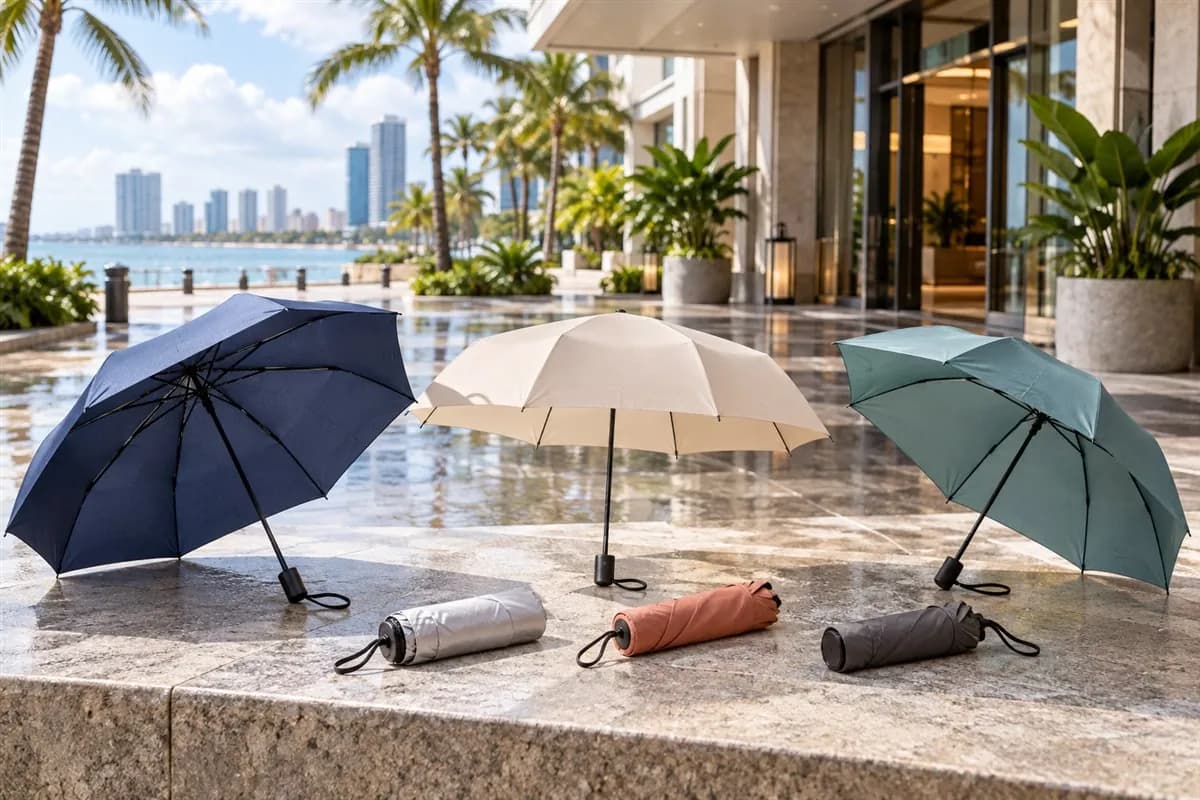
- Six umbrella types compared
- UV claims explained
- Wind and weight checklist
- Layered sun-protection advice
Why a UV travel umbrella deserves a place in your day bag
A travel umbrella can solve two common problems with one compact item: sudden rain and prolonged sun exposure. Shade can reduce direct sunlight on the head, face, shoulders and upper body, which is valuable during city walks, outdoor queues, temple visits and transfers without covered footpaths. In hot destinations, a reflective canopy may also feel more comfortable than walking in full sun, although perceived cooling depends on the canopy, airflow, humidity and surrounding surfaces.
An umbrella is only one part of sun protection. The World Health Organization explains that umbrellas and other shade structures do not provide complete UV protection because scattered radiation and reflections still reach the body. The CDC similarly recommends sunscreen and protective clothing even in shade. When the UV Index is 3 or higher, combine useful shade with clothing, a broad-brimmed hat, UV-blocking sunglasses and broad-spectrum sunscreen used according to its label.
The phrase anti-UV is easy to print on a marketplace listing, but it does not by itself prove performance. Look for a clearly identified canopy material, a stated UPF or UV-transmission test, the test method or standard where available, and evidence tied to the exact model and colour. Dark inner coatings and reflective outer layers may be useful design features, yet construction, coverage and verified testing matter more than a dramatic percentage in a title.
This guide recommends six types of umbrella rather than declaring unverified product winners. Each category solves a different travel problem. The Amazon buttons initially open searches carrying the Associate ID jalajahtravel-20. Once six exact product links are supplied, they can replace the searches in the same order.
- Treat umbrella shade as one layer of protection.
- Verify claims for the exact model and colour.
- Compare open diameter as well as folded size.
- Never sacrifice safe handling for a larger canopy.
1. A pocket-size UV umbrella for everyday city travel
A pocket-size umbrella is the easiest option to keep in a handbag or compact daypack. Its main advantage is availability: an umbrella left in a hotel room offers no protection when the weather changes. Short folded length and modest weight make this style suitable for cafés, museums, metro journeys and short walks between indoor stops.
Mini umbrellas achieve their size through more folding sections and smaller components. That can create extra movement in the shaft and more stress points in the ribs, so examine construction carefully. Check the open canopy diameter rather than assuming a small folded package provides full shoulder coverage. A comfortable handle, secure wrist strap and sleeve that accepts a damp umbrella are more useful than an extremely short case that is difficult to repack.
Choose this category for a traveller who prioritises portability and mostly expects light rain or sun. It is less suitable for exposed waterfronts and windy streets. If a gust begins to distort the canopy, close it and seek shelter rather than forcing the frame to remain open.
2. A vented wind-resistant umbrella for exposed routes
Wind is one of the fastest ways to damage a folding umbrella. A vented or double-canopy design allows some pressure to escape instead of concentrating the full load beneath one sheet of fabric. Flexible fibreglass ribs can bend more safely than brittle components, while reinforced joints and a stable shaft improve control. No handheld umbrella is storm-proof, and wind resistance should never be interpreted as safe use in severe weather.
Look at how the vent overlaps: it should release air without leaving a large path for rain. Count alone does not establish rib quality; material, geometry and joint construction matter. An umbrella with many weak ribs can fail sooner than a simpler, well-engineered frame. Read reviews for inversion, broken stretchers and handle separation, then check whether replacement or warranty service is realistic in your country.
This type is appropriate for coastal destinations, open plazas and commuters who regularly encounter gusts. It will usually be bulkier and heavier than an ultralight model. When lightning, extreme wind or flying debris is possible, put the umbrella away and move to a substantial building or vehicle.
3. A reflective outer canopy with a dark inner layer
Some sun-focused umbrellas use a light or reflective outer surface and a dark inner coating. The outer layer is intended to reflect part of the incoming solar energy, while the darker underside can reduce visible glare beneath the canopy. This arrangement can be comfortable for long daytime walks, but comfort is not the same as a verified UV-protection rating.
Ask what was tested, by whom and under which method. Confirm that the result applies to the finished umbrella rather than only a generic fabric sample. Inspect product photographs for pinholes, worn fold lines and coating separation, then check reviews after several months of use. Coated canopies should be dried fully open and stored only after they are dry because trapped moisture can cause odour, staining and material deterioration.
This is a useful choice for sunny urban trips, outdoor attractions and destinations near the equator. WHO notes that year-round protection may be necessary in tropical and equatorial regions depending on skin type and UV conditions. Continue protecting exposed arms, legs and reflected areas outside the umbrella's shadow.
4. An automatic open-and-close umbrella for commuters
An automatic folding umbrella can open quickly when leaving a taxi, station or hotel, and a close button collapses the canopy before entering a doorway. This convenience is particularly useful when one hand is holding luggage. The shaft normally still needs to be compressed manually after the canopy closes, so test how much force that final step requires.
Automatic mechanisms add springs, moving parts and weight. Check that the button is recessed enough to avoid accidental activation and that the umbrella locks securely in both positions. Keep the canopy pointed away from faces when opening. A wide, grippy handle improves control in rain, while a wrist loop helps when handling a phone or suitcase.
Choose it for daily transport, business travel and frequent transitions between indoors and outdoors. A manual umbrella is often lighter and mechanically simpler, so automatic operation should solve a real need rather than serve as a novelty. Never press the mechanism while fabric is tangled or the ribs are obstructed.
5. An ultralight manual umbrella for minimalist packing
An ultralight manual umbrella is designed for travellers who count every gram. A simple mechanism, slim handle and light frame can make it easy to carry through an entire itinerary. This is valuable when an airline applies a strict cabin-baggage limit or when the umbrella shares a small daypack with water, a camera and other essentials.
Low weight can come with a smaller canopy, thinner fabric or less rigid components. Compare the measured weight and diameter with a normal object rather than trusting adjectives such as featherlight. Check whether the ribs flex smoothly and return to shape, whether the slider protects fingers, and whether the handle remains usable with wet hands. A tiny knob may save weight but become tiring during a long walk.
This category suits fair-weather travel, hiking approaches with reliable forecasts and anyone who will consistently carry an umbrella only if it is light. It is not the best option for persistent wind or two-person coverage. Pair it with a waterproof pouch so residual rain does not soak documents or electronics inside the bag.
6. A wide-canopy compact umbrella for greater coverage
A wide-canopy travel umbrella offers more shade across the shoulders and better rain coverage for a traveller carrying a backpack. Some compact models are marketed for two people, although comfortable shared coverage depends on the actual arc and diameter. The larger surface can also catch more wind, so frame strength and safe handling become increasingly important.
Compare the open diameter, canopy depth and folded length. Check whether the umbrella remains balanced rather than pulling from one side, and whether the handle gives enough leverage to control the larger surface. A roomy canopy that folds into a very short package may use many joints and weigh more than expected. Confirm the actual specification table instead of estimating from photographs.
Choose this design for families, couples, photographers protecting a small camera, or travellers wearing a daypack. Close it in strong gusts and be considerate on crowded pavements; a broad canopy has more potential to block sightlines or strike another pedestrian. Coverage is helpful only when the umbrella can be used safely.
How to evaluate UV-protection claims
Start with traceability. A useful listing identifies the exact canopy fabric or coating and provides a test value such as UPF together with a test method, laboratory or certification that can be checked. Be cautious when a page mixes UV, waterproofing and heat claims without explaining how each was measured. A statement about blocking visible light or feeling cooler does not automatically establish UVA and UVB performance.
Coverage changes real-world protection. Sun angle, umbrella position, canopy size and reflected radiation affect which parts of the body remain shaded. Damage also matters: tears, stretched seams, pinholes and a peeling coating can reduce useful coverage. Inspect the open umbrella against a bright background, follow its care instructions and replace it when the structure no longer holds the canopy correctly.
Check the local UV Index rather than judging risk from temperature or cloud alone. WHO recommends special care when the UV Index is 3 or above. UV can still be relevant on cloudy days, and reflection can increase exposure around water, sand, snow and bright buildings. Schedule longer outdoor activities away from intense midday UV when practical.
A layered sun-protection routine for travel
Use the umbrella to create portable shade, then protect skin that remains outside its shadow. The CDC recommends tightly woven clothing, shade and sunscreen, while the FDA advises broad-spectrum sunscreen used regularly and as directed. The appropriate product and instructions depend on the country and user; read the label, cover commonly missed areas and follow reapplication directions, especially after sweating or swimming.
Wear sunglasses labelled to block UVA and UVB and consider a broad-brimmed hat when it fits the activity. An umbrella can shade the upper body but may not protect the sides of the face, lower legs or light reflected upward. People taking medicines or using products that increase sun sensitivity should ask a healthcare professional or pharmacist about appropriate precautions.
For children, heat and sun require extra planning. Seek substantial shade, schedule breaks, offer fluids appropriately and follow local health guidance for sunscreen and infants. Do not use a handheld umbrella during lightning, severe wind or anywhere it interferes with traffic awareness. Sun protection should support safe travel rather than distract from the surroundings.
- Check the UV Index before a long outdoor day
- Use verified shade with clothing and sunscreen
- Protect eyes with UVA/UVB-blocking sunglasses
- Dry the umbrella open before storage
- Close it during strong wind or lightning
- Inspect coating, ribs and joints regularly
Which travel umbrella should you choose?
Choose the pocket model when the most important feature is having it with you. Select a vented frame for routinely breezy routes, a reflective coated canopy for long sunny walks, and automatic open-and-close operation for frequent transport transitions. An ultralight manual umbrella suits minimalist packing, while a wide canopy helps cover a backpack or companion.
Before buying, write down the maximum folded length and weight you are willing to carry, then decide the minimum open diameter that covers your shoulders and bag. Compare those figures with the frame, mechanism and evidence behind any UV claim. Check seller identity, warranty and returns because fit and handle comfort are difficult to judge from a listing alone.
The best UV travel umbrella is the one that provides useful shade, survives the conditions in which it will be used and remains compact enough to leave the hotel every morning. Treat it as part of a complete sun-safety routine, maintain it after rain and replace it when the canopy or frame can no longer provide reliable coverage.
Frequently asked questions
Do UV umbrellas really protect skin from the sun?
A suitable canopy can provide useful shade and reduce direct exposure, but WHO notes that umbrellas do not provide complete UV protection because scattered and reflected radiation still reaches the body. Combine shade with clothing, sunglasses and sunscreen.
What should I look for in an anti-UV umbrella?
Look for traceable UPF or UV-transmission testing tied to the exact model, useful canopy coverage, durable coating, a stable frame, manageable weight and dimensions that fit your day bag.
Is a black umbrella better for UV protection?
Colour alone does not prove protection. Fabric density, layers, coatings, condition, coverage and verified testing matter. Review evidence for the finished umbrella rather than relying only on colour.
Can a UV umbrella replace sunscreen?
No. Shade does not block all scattered or reflected UV. Follow official advice for clothing, sunglasses and broad-spectrum sunscreen used as directed on exposed skin.
Is a lightweight umbrella strong enough for wind?
Some light umbrellas use flexible ribs and reinforced joints, but no handheld umbrella is storm-proof. Check construction and close it when gusts make control difficult.
Are automatic umbrellas better for travel?
Automatic models are convenient during frequent indoor-outdoor transitions, but they add weight and moving parts. Manual models can be lighter and simpler. Choose according to the trip.
How should I store a coated travel umbrella?
Shake off water, open it fully in a ventilated place, let it dry, then fold it without forcing the ribs. Follow the manufacturer's care instructions for the coating.
Are these Amazon links affiliate links?
Yes. Eligible Amazon links use the Associate ID jalajahtravel-20. Qualifying purchases may earn this site a commission without increasing the buyer's price.
Sources and further reading
We used the following primary consumer resources to review time-sensitive claims in this guide.
Browse UV travel umbrellas in one place
Check the open diameter, folded length, weight, frame, canopy testing, seller and warranty before ordering.
Affiliate disclosure. As an Amazon Associate, we may earn from qualifying purchases made through eligible links on this page, at no additional cost to you. Product availability, testing claims and specifications can change; our editorial guidance remains independent of commercial relationships.