- Five northern areas compared
- City access versus highland atmosphere
- Rain, traffic and road advice
- A practical booking checklist
What travellers mean by North Bandung
North Bandung is a useful travel label, but it is not one compact hotel district with a single centre. It can refer to neighbourhoods within Bandung city, including Dago, Setiabudi and Ciumbuleuit, as well as higher areas around Punclut and places farther north in West Bandung Regency, especially Lembang. These locations share cooler highland associations, yet they create very different trips. A room near lower Dago can remain practical for central Bandung, while a villa beyond Lembang may place countryside and mountain attractions closer but make an evening in Braga considerably less convenient.
This distinction matters when searching for accommodation in North Bandung, Indonesia. Booking platforms may group properties under Dago, Dago Atas, Setiabudi, Ciumbuleuit, Lembang or nearby village names. A listing can use 'Bandung' in its marketing even when it sits outside Bandung city. Always open the map, identify the exact village or neighbourhood, and test travel time to the places you will actually visit. The best stay is the one that supports the itinerary, not necessarily the property with the widest view.
Dago: the most flexible base for city and hills
Dago stretches from a lively urban corridor around Jalan Ir. H. Juanda towards greener slopes commonly described as Dago Atas or Dago Pakar. Lower and central Dago suit travellers who want cafes, shops, campuses and easier access to Bandung's central districts. Higher Dago trades some convenience for hillside atmosphere, views and proximity to places such as the Djuanda Forest Park area. The official Bandung tourism mapping also treats Dago as part of the city's shopping and creative geography, while North Dago and Punclut are associated with culinary travel.
Choose the lower section if this is a first visit built around museums, heritage streets, shopping and restaurants across the city. Consider Dago Atas when quiet surroundings, a balcony, a resort setting or a slower weekend matters more. The word 'Dago' alone is not precise enough: properties at opposite ends of the corridor can produce very different driving times. Check whether a steep access road, narrow final approach or late-night transport affects the stay, and read recent guest reviews specifically for road noise, room dampness, hot water and mobile reception.
Setiabudi and Ciumbuleuit: a practical middle ground
Setiabudi follows one of the main routes towards Lembang. It offers city hotels, apartments, guest houses and family-oriented stays near dining and everyday services. This is a useful compromise for travellers planning both Bandung city time and a day in the northern highlands. It does not eliminate traffic, but it can avoid starting every northbound journey from the southern or eastern side of the city. The municipal creative-belt mapping connects the Setiabudi area with Ciumbuleuit, Gegerkalong, Hegarmanah, Kiputih, Ledeng, Raya Lembang and Sersan Bajuri, showing how these neighbourhoods form a practical northern corridor rather than isolated points.
Ciumbuleuit feels more residential and hilly. It can work well for longer stays, couples, university visits and travellers who value restaurants and a calmer evening without moving as far out as Lembang. Apartment-style accommodation may provide a kitchen or living space, but service, parking, lift access and housekeeping vary widely. Confirm the actual unit operator, check-in method and building rules. In either area, a property beside a main road can simplify car access while increasing noise; a quieter lane can reverse that trade-off.
Punclut and Dago Pakar: views with access trade-offs
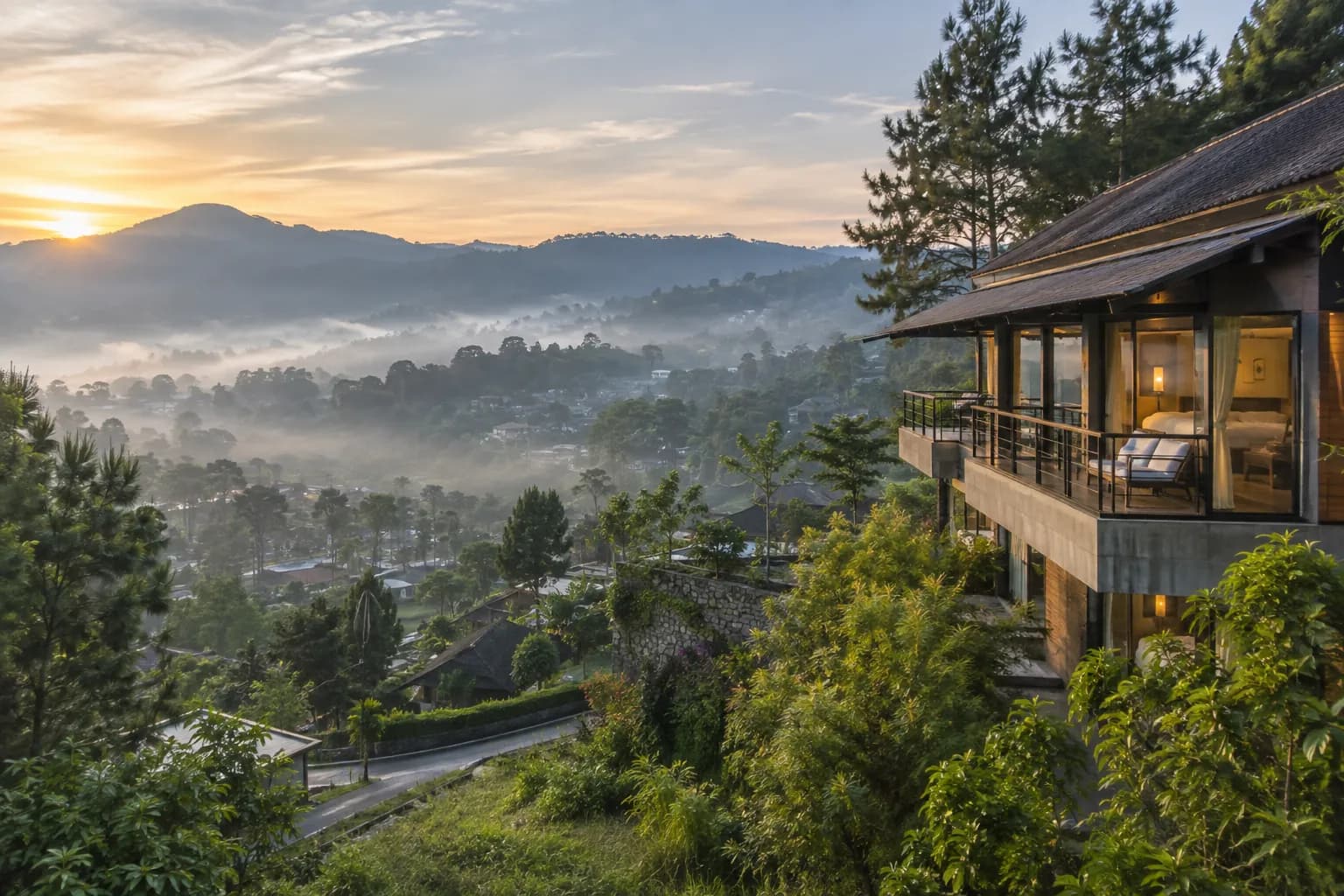
Punclut and the upper slopes around Dago Pakar appeal to travellers looking for city lights, cooler evenings, restaurants with views and accommodation that feels removed from central Bandung. Villas and larger residences can suit families or groups, particularly when shared space matters more than hotel service. The setting can be memorable, but photographs rarely explain the entire approach road. A short distance on the map may involve steep gradients, bends, limited street lighting or congestion around popular dining periods.
Ask the host whether an ordinary car can reach the entrance comfortably, whether there is secure on-site parking, and whether ride-hailing drivers routinely accept pickups there. For a villa, verify bedroom locations, bathroom count, hot-water capacity, kitchen equipment, drinking water, staff presence, quiet hours, deposits and cleaning charges. A dramatic open view can also mean exposure to wind and rain. Families with toddlers, older guests or anyone with limited mobility should ask about stairs, balcony barriers, slippery outdoor surfaces and the route from parking to the room before paying.
Lembang: stay close to the highland itinerary
Lembang lies north of Bandung in West Bandung Regency and is best treated as a destination area rather than simply another city neighbourhood. Indonesia's official tourism portal describes it as a mountain escape known for nature and culinary experiences. The wider regency's official tourism inventory includes numerous attractions in and around Lembang, reinforcing why travellers with several northern stops may benefit from sleeping nearby instead of commuting from central Bandung each day.
Accommodation ranges from conventional hotels and small guest houses to villas, cabins, farm-style stays and camping-oriented properties. Choose Lembang when the itinerary prioritises highland scenery, family attractions, outdoor activities or an early start farther north. Choose a city-side area when Braga, Gedung Sate, museums, shopping and railway access dominate. 'Lembang' can cover a broad search area, so compare the property with each planned stop rather than assuming every attraction is close. Also check whether breakfast begins early enough, restaurants deliver after dark, and the property provides reliable transport assistance.
Traffic and transport should shape the booking
Northbound roads become busy on weekends, public holidays and popular arrival or departure periods. Indonesia's tourism portal specifically notes regular weekend congestion on the road towards Lembang. A distance that looks modest should therefore be judged by time of day and direction of travel. Avoid building a rigid itinerary around optimistic map estimates. Place fixed reservations on the same side of the city where possible, leave a generous buffer, and ask the accommodation about locally realistic departure times.
Travellers arriving by intercity train should compare the stay with Bandung Station, while passengers using the Jakarta–Bandung high-speed service should confirm the current station and onward connection shown on their ticket. Do not choose a hotel merely because a search result says 'near Bandung': the last transfer can still be substantial. Public transport coverage and walking conditions vary, especially on upper slopes. If you will not drive, ask about ride-hailing reliability after dark and whether reception can arrange a trusted car. If you will drive, verify parking for the exact vehicle and check-in hour.
- Compare routes at the hours you expect to travel.
- Group northern sights into the same day.
- Confirm station or airport transfer arrangements directly.
- Treat weekend journey estimates as flexible.
Weather, elevation and room comfort
Bandung's northern elevations are part of the appeal, bringing cooler nights and frequent cloud or mist, but weather changes the accommodation checklist. Indonesia has a monsoon-influenced climate, and BMKG advises travellers to use current forecasts rather than relying only on broad seasonal assumptions. Check Bandung city or West Bandung forecasts shortly before travel, especially when the booking involves outdoor facilities, exposed roads or a hillside villa. Rain can slow transfers and make steep paths or tiled terraces slippery.
Air conditioning may be less important in a cool property than ventilation, bedding, hot water and control of dampness. Recent reviews can reveal whether a room smells musty, whether windows seal against road noise, and whether hot water remains stable when a group showers. Mosquito screens, blackout curtains and dehumidification can matter as much as a swimming pool. Pack a light warm layer and rain protection even if daytime Bandung feels mild. Never assume an infinity pool will be heated; ask when that feature matters to children or older travellers.
How to compare a hotel, guest house, apartment or villa
Hotels usually provide the clearest reception, housekeeping and breakfast structure. Guest houses can offer a smaller scale and local atmosphere, though sound insulation and front-desk hours vary. Apartments suit travellers who need living space or simple food preparation, but the booking may be managed by an individual rather than the building. Villas work for groups when shared rooms, kitchens and gathering areas justify the added coordination. Cabins and glamping stays emphasise setting; they require closer checks on private bathrooms, insects, temperature, rain protection and luggage access.
Compare the total price for the whole party, not just the first displayed nightly rate. Look for taxes, service fees, extra-person charges, deposits, parking, breakfast, cleaning, refundable conditions and the payment deadline. Confirm bed types rather than relying on the number of guests accepted by the search tool. Read recent low and high reviews, then look for repeated patterns. Finally, contact the property through the booking channel when a feature is essential. A filter result is useful for discovery, but written confirmation is stronger evidence for a cot, connecting rooms, accessibility or late arrival.
A booking checklist for international visitors
Before booking, save the property's full address in Indonesian and check it independently on a map. Confirm the accepted identification, payment method, deposit, check-in window and contact channel. International visitors should verify whether reception operates around the arrival time and whether staff can assist with transport if communication with a driver becomes difficult. Keep the booking voucher available offline. If a villa uses self check-in or a meeting point, request instructions before the travel day rather than after reaching a dark or unfamiliar lane.
Choose free cancellation when plans are still moving, but read the deadline in the property's local time and note whether payment fees are refundable. Recheck the reservation shortly before arrival, particularly for a private unit. Share the property name, address and contact details with everyone in the group. North Bandung rewards careful location choice: Dago balances city and hills, Setiabudi and Ciumbuleuit offer a useful middle position, Punclut and Dago Pakar prioritise atmosphere, and Lembang makes sense when the highlands are the trip's main purpose.
- Verify the exact map pin and final approach.
- Confirm total price, bed layout and cancellation deadline.
- Ask about hot water, dampness, stairs and parking.
- Save the voucher, address and contact details offline.
Frequently asked questions
What is the best area to stay in North Bandung for a first visit?
Dago or Setiabudi is usually the most flexible choice for a first visit combining central Bandung with northern sights. The best location still depends on the exact itinerary and expected travel hours.
Is Lembang part of Bandung city?
No. Lembang is in West Bandung Regency, north of Bandung city. Accommodation may still use Bandung in destination marketing, so check the full address and map pin.
Should I stay in Dago or Lembang?
Choose Dago for easier access to city dining, shopping and central attractions. Choose Lembang when highland attractions and a quieter mountain setting are the main purpose of the trip.
Is North Bandung easy to explore without a car?
It depends on the neighbourhood. Lower Dago and parts of Setiabudi are more connected, while upper slopes and rural Lembang properties may require ride-hailing or a hired car. Confirm pickup reliability with the property.
Do hotels in North Bandung need air conditioning?
Some higher properties are naturally cool, but comfort varies by elevation, sun exposure and ventilation. Check recent reviews and prioritise ventilation, bedding, damp control and reliable hot water rather than assuming AC is essential or unnecessary.
When is traffic busiest between Bandung and Lembang?
Weekends, public holidays and popular daytime travel periods can be busy. Conditions change, so check a live map and ask the accommodation for a realistic departure time for your date.
What should families check before booking a hillside villa?
Ask about stairs, balcony rails, slippery surfaces, pool barriers, bedroom layout, hot-water capacity, parking and the route from the vehicle to the entrance. Confirm these points directly when they affect safety.
Sources and further reading
We used the following primary consumer resources to review time-sensitive claims in this guide.
- Indonesia Travel: Lembang mountain escape
- Bandung Tourism Office: city tourism-area mapping
- Bandung Tourism Office: Bandung creative-belt mapping
- West Bandung Regency: official tourism inventory
- Indonesia Travel: Bandung shopping corridors and weekend traffic
- BMKG: Bandung city weather forecast
- Traveloka: current Dago accommodation search
Compare options for your trip.
Continue to Traveloka to check current schedules, availability, and final prices for your travel dates.
Affiliate disclosure. This page contains Traveloka affiliate links. We may earn a commission when you book through them, at no additional cost to you. Commercial relationships do not determine our editorial recommendations.